
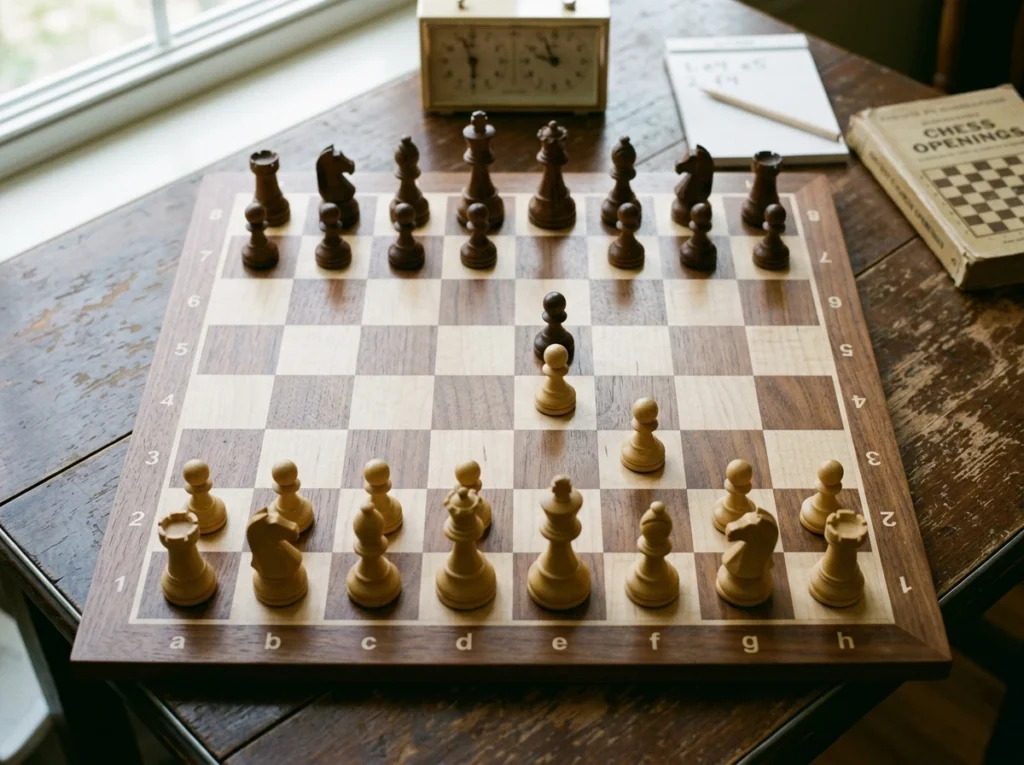
Trapping a queen in chess is one of the most exciting and game-changing moves, often shifting a balanced game into a winning position.
The queen, worth 9 points, is the most powerful piece on the board. Losing it leaves your opponent in a weakened position, struggling to find counterplay while you take control. These traps take advantage of mistakes such as greed, overreach, or miscalculation that occur at every level of play. Whether it’s a beginner falling for Legal’s Mate or a grandmaster setting up a complex trap, queen traps reward players with sharp vision. This guide will cover the patterns, strategies, and practice needed to become a queen-hunting expert.
Why Trapping the Queen Can Win You the Game
Capturing the queen gives you a huge advantage in material, equal to three rooks or nine pawns.
It also messes up your opponent’s coordination, forcing them to defend passively and opening up paths for your attack. Psychologically, it breaks their confidence and leads to more mistakes. In endgames, a trapped queen often leads to quick checkmates. Even if the queen is saved at a cost, you have gained tempo and initiative. Tablebases show that with the queen, you win about 95% of the time.
Common Beginner Mistakes That Lead to a Trapped Queen
Beginners often bring out their queen too early, chasing pawns (like Qxb2, which can trap the queen).
Ignoring pins, moving into forks, or making unsupported moves can lead to disaster. Greedily taking pieces without leaving a way to escape (few options to retreat) is a sure way to lose the queen. Always check the number of pieces attacking versus those defending.
Basic Patterns to Trap a Queen in the Opening
Early traps often entice the queen with gambits.
Scholar’s Mate Attempt: White plays Qh5 and Bc4. Black may respond with Qf6 or Nf6, and if they are greedy, the queen is trapped.
Legal’s Trap: 1.e4 e5 2.Nf3 d6 3.Bc4 Bg4?! 4.Nc3 g6?? 5.Nxe5 Bxd1? 6.Bxf7+—the queen is trapped, and checkmate follows.
Famous Queen Traps in Chess History
Legal’s Mate (1750): In the game between Saint Brie and Legal, the queen is sacrificed to expose the king.
Elephant Trap (QGD): White moves the knight to g5, and when the bishop takes on f7, it leads to a queen win.
Blackburne Shilling: 1.e4 e5 2.Nf3 Nc6 3.Bc4 Nd4?? 4.Nxe5 captures the queen. Rubinstein Trap in QGD: The queen is caught on h4.
Free Demo Class for Kids
Let your child explore 60-minute free interactive session with FIDE Rated coaches.
Enroll HereHow to Trap a Queen Using Pawns
Pawns can limit the queen’s movement by creating a net.
Advancing a pawn chain, like a3-b4-c3, can block the queen’s escape. Pushing pawns to restrict the queen’s space, such as g4-h5 against the queen on the queenside, can be effective. In the middlegame, pawn storms can draw the queen out, and then you can close in with moves like …a5 or e5. An example is a pawn wall on the fifth rank that traps an advanced queen.
Trapping the Queen with Minor Pieces
Knights are great at this: placing them on central squares like e5 or d5 can fork or block the queen.
Bishops can control diagonals and pin the queen to the edge. A combination of bishops on adjacent diagonals and knights sealing off squares can be effective. An example is the knight on g4 trapping the queen on h4.
Queen Traps in Popular Openings
– Sicilian: In the Dragon variation, the queen on h5 is captured by …Rxh5.
– Caro-Kann: In the Advance Variation, capturing the queen on b2 with Qxb2 leads to a trap on a3.
– QGD: In the Elephant Trap, the knight moves to g5, luring the queen, and then the bishop takes on f7, winning the queen.
– French: In the Rubinstein variation, the queen is caught on h4.
Middlegame Queen Trapping Strategies
Lure the queen with pawns on b2 or h2, then close in with moves like a3 or Bb4.
Overload the queen’s defenders by forcing her to defend multiple pieces. Use checks to deflect her attention. Limit the queen’s movement to just a few squares and target the weakest points. Use your space advantage to squeeze her in tighter.
Tactical Motifs That Help Trap a Queen
– Decoy: Sacrifice a piece to draw the queen out, like Nxe5.
– Deflection: Force the queen away from where she can defend.
– Discovery: Move a piece to reveal an attack that the queen was covering.
– Zugzwang: Make the queen move into a trap by limiting her options.
– Overload: Make the queen defend too many pieces, causing her to be vulnerable.
How to Spot When Your Opponent’s Queen Is in Danger
Check if the queen has fewer than three escape squares.
Is she surrounded by four or more attacking pieces? Are her pieces poorly coordinated, like isolated ones? Is she greedy, positioning herself on the edge of the board? Look for these patterns after each move.
How to Avoid Getting Your Own Queen Trapped
Keep your queen centralized and supported.
Always ensure she has at least four safe retreat squares. Avoid launching early attacks without proper development. Always check for threats, especially if your opponent is about to move.
Practice Positions to Master Queen Traps
1.Legal’s: rnbqkbnr/pppp1ppp/5p2/4P3/2B1P3/5N2/PPPP1PPP/RNBQK2R w KQkq – 0 1 (after e5)
2.b2 trap: r1bqkbnr/ppp1pppp/2n5/3pP3/2B1p3/5N2/PPPP1PPP/RNBQK2R (Qxb2?? a3)
Lichess puzzles tagged “queen trap” can also help.
Engine vs Human Understanding of Queen Traps
Engines can calculate over 30 moves ahead, spotting traps humans often miss, like quiet pawn moves that set up a net.
Humans are better at recognizing patterns, so train your intuition with puzzles. Engines may not fully understand the psychological pressure that follows a queen’s capture.
Psychological Pressure After Trapping the Queen
Your opponent might panic and rush to push pawns or attack their king.
Stay focused and play accurately just one mistake can give back the advantage. Celebrate internally, as this kind of pressure often leads to a win in the endgame.
Final Checklist: How to Trap a Queen in Chess Consistently
- Use bait like a pawn or an undefended piece to lure the queen.
- Develop your pieces to control key areas of the board.
- Limit the queen’s escape routes with pawns or minor pieces.
- Attack simultaneously with various tactics.
- Calculate all possible variations.
- Scan for familiar tactical motifs to spot traps.
Free Demo Class for Kids
Let your child explore 60-minute free interactive session with FIDE Rated coaches.
Enroll HereConclusion
Mastering queen traps takes your game to the next level. Take advantage of your opponent’s mistakes and grab control of the game.
Whether it’s Legal’s quick trap or a clever move in the middle game, recognizing these patterns can make all the difference. Keep practicing every day, stay focused, and don’t get too greedy. Keep looking for opportunities to trap your opponent’s queen. They’re waiting for you to strike!
FAQ
They are rare but can be very important.
GMs often use more subtle versions.
Openings like e4 e5 gambits and QGD sidelines are commonly used.
Try puzzles on Lichess or Chess.com, and analyze games to spot them.
Yes, they can help confirm if a trap is real, but they aren’t good at finding new ones.
A trap wins material without losing, while a sacrifice is made to gain a better position.
It’s possible, but usually in the form of stalemate traps, and they are quite rare.
Also Read
How to Trap a Queen in Chess?
How to Analyze Your Chess Games Effectively
Top 5 Most Powerful Chess Tactics for Kids
Ultimate Guide to Chess Endgames for Beginners
10 Tips to Improve Your Chess Winning Strategy Quickly
Pawn Rules In Chess
Rook Openings In Chess And Their Strategies
Knight vs Bishop Endgame
6 Knight Moves in Chess
Castle Chess
Chess Algebraic Notation
- admin2
- Blog
- December 12, 2025
- Comments Off on French Defense
French Defense
- admin2
- Blog
- December 7, 2025
- Comments Off on Sicilian Defense
Sicilian Defense
- admin2
- Blog
- November 28, 2025
- Comments Off on Difference between Stalemate and Checkmate
Difference between Stalemate and Checkmate
- admin2
- Blog
- November 20, 2025
- Comments Off on Ruy Lopez Opening
Ruy Lopez Opening
- admin2
- Blog
- November 14, 2025
- Comments Off on Fool’s Mate
Fool’s Mate
- admin2
- Blog
- November 8, 2025
- Comments Off on Scholar mate
Scholar mate
- admin2
- Blog
- October 22, 2025
- Comments Off on What is a Stalemate ?
What is a Stalemate ?
- admin2
- Blog
- October 14, 2025
- Comments Off on Can a King Checkmate a King ?
Can a King Checkmate a King ?
- admin2
- Blog
- October 7, 2025
- Comments Off on Best Opening For Black
Best Opening For Black
- admin2
- Blog
- October 4, 2025
- Comments Off on How to checkmate with queen and king
How to checkmate with queen and king
- admin2
- Blog
- September 26, 2025
- Comments Off on Online Chess vs Board Chess
Online Chess vs Board Chess
- admin2
- Blog
- September 24, 2025
- Comments Off on How to Checkmate in 4 Moves
How to Checkmate in 4 Moves
- admin2
- Blog
- September 18, 2025
- Comments Off on Benefits of Playing Chess
Benefits of Playing Chess
- admin2
- Blog
- September 8, 2025
- Comments Off on Best Chess Coaching in india
Best Chess Coaching in india
- admin2
- Blog
- August 25, 2025
- Comments Off on Rapid chess vs blitz chess
Rapid chess vs blitz chess
- admin2
- Blog
- August 21, 2025
- Comments Off on Rapid Chess vs Classic Chess
Rapid Chess vs Classic Chess
- admin2
- Blog
- August 12, 2025
- Comments Off on 7 Brain Boosting Benefits Of Chess
7 Brain Boosting Benefits Of Chess
- admin2
- Blog
- August 4, 2025
- Comments Off on Top 10 Chess Openings for Beginners
Top 10 Chess Openings for Beginners
- admin2
- Blog
- July 11, 2025
- Comments Off on Top 10 Reasons Kids Should Learn Chess
Top 10 Reasons Kids Should Learn Chess
- admin2
- Blog
- July 10, 2025
- Comments Off on Inspirational Story Of Indian Chess Grandmaster Gukesh Dommaraju
Inspirational Story Of Indian Chess Grandmaster Gukesh Dommaraju
- admin2
- Blog, Chess Tips
- July 8, 2025
- Comments Off on 7 Brain Benefits Of Playing Chess
7 Brain Benefits Of Playing Chess
- admin2
- Blog, Our blog
- May 13, 2025
- Comments Off on
- admin2
- Blog
- May 7, 2025
- Comments Off on Patterns in Chess
Patterns in Chess
- admin2
- Blog
- May 7, 2025
- Comments Off on Why Venture Chess Academy ?