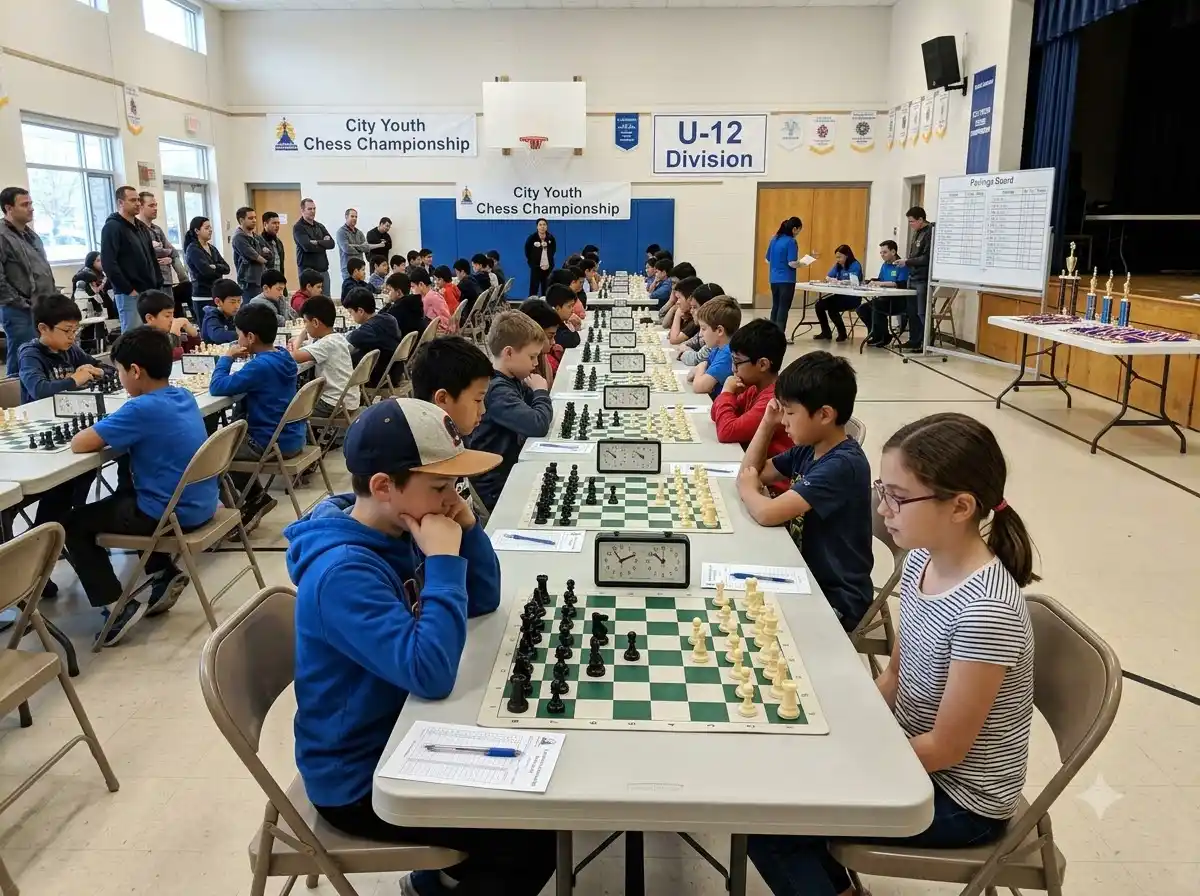

One of the most exciting moments for any new chess player is delivering a checkmate in just 4 moves. Known as the Scholar’s Mate, this classic sequence is one of the simplest and fastest ways to win a chess game. While experienced players usually avoid falling into this trap, understanding how it works is an essential milestone for beginners. In this guide, we’ll walk you through the four-move checkmate step-by-step, explain how to defend against it, and share practical advice for improving your overall game.
What Is the 4-Move Checkmate in Chess Called?
The 4-move checkmate is most commonly known as the Scholar’s Mate. It works by using your queen and bishop in combination to target your opponent’s weakest square early in the game: f7 (for Black) or f2 (for White). These squares are vulnerable because they are protected only by the king at the start of the game.

Step-by-Step Guide
Let’s break down the exact sequence for White.
- Move 1: e4. Advance your king’s pawn two squares. This opens the diagonal lines so your queen and bishop can enter the game.
- Move 2: Qh5. Bring your queen out to h5. This creates an immediate threat to Black’s e5 pawn while aiming directly at the weak f7 square.
- Move 3: Bc4. Develop your bishop to c4. Now, both your powerful pieces (the queen and bishop) are coordinating an attack on the f7 square.
- Move 4: Qxf7# If Black fails to defend properly, capture the pawn on f7 with your queen. That’s checkmate! The black king cannot move, and no piece can block or capture your queen because it is protected by the bishop.
Common Defenses Against the 4-Move Checkmate
If you want to win fast, you also need to know how to stop opponents from using the Scholar’s Mate against you. If White tries the Qh5 and Bc4 setup, here is how Black can defend:
- Develop your knights: Play Nc6 early to protect the center, or use Nf6 to block the queen’s path to f7.
- Push your g-pawn: Pushing your pawn to g6 forces the white queen to retreat.
- Avoid reckless pawn moves: Keep your kingside pawns solid and focus on developing your minor pieces.
Easy Guide to 4 Move Checkmate in Chess
While the Scholar’s Mate is the fastest practical way to checkmate in chess, you shouldn’t rely on it exclusively. Keep these tips in mind:
- Use it as a learning tool: The true value of this trap is learning how piece coordination works and why protecting the f7 square is vital.
- Play it against other beginners: It rarely works on experienced players who know the defense.
- Have a backup plan: Be patient. If your opponent spots the trap, smoothly transition into a normal opening by developing your remaining pieces.
How Beginners Can Checkmate in 4 Moves
The Scholar’s Mate is a step by step chess tutorial for 4 move checkmate, perfect for absolute beginners. But it’s equally important to learn how to win chess quickly for beginners beyond just this trap. Use it to:
- Understand how queens and bishops can work together.
- Learn why protecting the f7/f2 square is vital.
- Develop awareness of fast attacks in chess.
Even if your opponent avoids the trap, you’ll still have good development with your queen and bishop out, which can lead to an aggressive middle game.

Tips to Win Chess with 4 Moves Checkmate
Here are some quick tips to win chess with 4 moves checkmate:
- Play it against other beginners—it works best against new players.
- Be patient. If your opponent spots it, transition into a regular opening.
- Always remember the key target: the f7 (or f2) square.
- Don’t rely on this trick alone. Use it as a learning tool to build better strategies.
By following these tips, you’ll not only know how to do the Scholar’s Mate 4 move checkmate but also how to play stronger games in general.
Let’s quickly recap the step by step 4 move checkmate:
- Move 1: e4 (open lines for your queen and bishop)
- Move 2: Qh5 (create an early threat)
- Move 3: Bc4 (develop and target f7)
- Move 4: Qxf7# (checkmate if unprotected)
That’s the entire step by step chess tutorial for 4 move checkmate simplified for absolute beginners.
How to Win Chess in 4 Moves
If you’re asking how to win chess in 4 moves or even how to win a chess game in just 4 moves, the Scholar’s Mate is the direct answer. It’s the fastest way to win chess in 4 moves explained in beginner terms.
But here’s an important note: While it’s thrilling to use, experienced players will easily spot it and defend against it. So, think of this easy chess checkmate strategy more as a way to learn about piece coordination than a guaranteed victory every time.
Fastest Way to Checkmate in Chess
The fastest way to checkmate in chess is indeed the Scholar’s Mate (4 move checkmate). However, there’s also a rare and infamous checkmate called Fool’s Mate, which occurs in just two moves if the opponent makes serious mistakes. But Fool’s Mate is highly unlikely in real games.
That’s why the Scholar’s Mate remains the most practical and widely used fastest way to checkmate in chess for beginners.

Common Defenses Against the 4 Move Checkmate
If you’re learning chess tricks for beginners to win fast, you should also know how to defend against 4 move checkmate so you don’t fall for it yourself.
As Black, if White tries Qh5 and Bc4:
- Play Nc6 or Nf6 to block the queen’s path.
- Push your pawn to g6 to attack the queen.
- Don’t move your pawns recklessly on the kingside.
Understanding these defenses will keep you safe from being checkmated in 4 moves.
Tips to Win Chess with 4 Moves Checkmate
Here are some quick tips to win chess with 4 moves checkmate:
- Play it against other beginners—it works best against new players.
- Be patient. If your opponent spots it, transition into a regular opening.
- Always remember the key target: the f7 (or f2) square.
- Don’t rely on this trick alone. Use it as a learning tool to build better strategies.
By following these tips, you’ll not only know how to do the Scholar’s Mate 4 move checkmate but also how to play stronger games in general.
Why Learn the 4 Move Checkmate?
Some may argue that the Scholar’s Mate is “cheap” or unrealistic against stronger players. But for beginners, it’s an excellent way to:
- Understand the importance of piece coordination
- Recognize weak squares in openings
- Learn the danger of moving pawns recklessly
- Gain confidence in delivering checkmate
It’s not about tricking opponents but about learning easy chess checkmate strategies that build your fundamentals.
Conclusion
Learning how to checkmate in 4 moves step by step for beginners is both fun and educational. The Scholar’s Mate is the most famous chess 4 moves checkmate, offering the fastest way to win chess in 4 moves explained for new players.
Use this easy guide to 4 move checkmate in chess to surprise your friends, practice beginner-friendly methods, and build confidence in your skills. But remember, chess is not just about quick tricks—it’s about long-term strategy, planning, and creativity.
By mastering both the simple 4 move checkmate and learning easy chess checkmate strategies, you’ll be well on your way to becoming a stronger player.
Frequently Asked Questions (FAQ)
It’s called the Scholar’s Mate, where the queen and bishop work together to checkmate the opponent’s king early in the game.
By following the Scholar’s Mate sequence: e4, Qh5, Bc4, Qxf7#. This is the fastest way to win chess in 4 moves explained for beginners.
No, experienced players will defend against it. But it works well against absolute beginners.
Play Nc6, Nf6, or push the pawn to g6 to attack the queen. Avoid leaving your f7/f2 pawn undefended.
No, it’s useful for learning piece coordination, but you should also study beginner-friendly openings and strategies for long-term improvement.
Free Demo Class for Kids
Let your child explore 60-minute free interactive session with FIDE Rated coaches.
Enroll Here