
In the world of chess, nothing beats the excitement of a quick and decisive win.
Aggressive openings that give up material early for quick development, open lines, and direct attacks on the king are great for players who love fast, tactical battles and want to finish games in 15 to 25 moves. These openings can overwhelm opponents who aren’t ready and create a lot of chaos on the board.
Here are the Top 5 Aggressive Chess Openings that can help you win quickly, especially in blitz, rapid, and club-level games.
They are perfect for players with a rating below 2000 who enjoy sharp, fun positions with high chances of winning when the opponent makes a mistake.
Introduction
Aggressive openings focus on taking the initiative instead of holding onto material.
By sacrificing pawns (or sometimes pieces) at the start, you can develop your pieces faster, open up files and diagonals, and create attacking chances against the opponent’s uncastled king. These lines work best against players who are eager to accept gambits or don’t defend properly. While chess engines may show equal chances with perfect play, humans often struggle under early pressure. The five openings listed below, King’s Gambit, Danish Gambit, Fried Liver Attack, Vienna Game, and Smith-Morra Gambit, are proven to help win quickly.
King’s Gambit Opening : 1.e4 e5 2.f4

The King’s Gambit is one of the most classic and romantic openings.
White challenges Black’s center and opens the f-file for the rook after castling. If Black takes the f4 pawn (**2…exf4**), White develops quickly with **3.Nf3** (to prevent …Qh4+) and aims for **Bc4**, **d4**, and a strong kingside attack.
Key ideas: Sacrifice the f-pawn for control of the center and open lines.
The Muzio Gambit (**3.Nf3 g5 4.Bc4 g4 5.0-0**) is very sharp. This opening has a high win rate for players below 1800 because Black often fails to properly defend the exposed king. Notable players who have used this opening include Adolf Anderssen and modern blitz specialists.
Danish Gambit : 1.e4 e5 2.d4 exd4 3.c3

One of the most aggressive gambits, the Danish Gambit offers one, two, or even three pawns for a huge lead in development.
After **3…dxc3 4.Bc4 cxb2 5.Bxb2**, White has two strong bishops aimed at the kingside and center.
The main idea is to overwhelm Black before they can castle.
If Black declines or plays cautiously, White still gets a strong position. Traps are common if Black takes too much material. This opening is especially effective in blitz games where precise defense is difficult.
Danish Gambit : 1.e4 e5 2.d4 exd4 3.c3

This isn’t just an opening it’s a direct attack on f7, the weakest spot in Black’s position.
After the knight moves to f7, Black’s king has to come out into the center (**6…Kxf7**), and White quickly follows up with **7.Qf3+**, getting their pieces into position fast.
The Fried Liver (and its similar cousin, the Lolli Attack) causes immediate chaos on the board.
It hits the Two Knights Defense hard, especially at the club level. A lot of games finish in under 15 moves with a strong attack on Black’s exposed king.
Vienna Game : 1.e4 e5 2.Nc3

This opening is often overlooked, but it can lead into aggressive lines like the Vienna Gambit (**2…Nf6 3.
f4**). White places the knight on c3, supports the e4 pawn, and gets ready for a quick kingside attack or central break.
It’s flexible and risky.
The Frankenstein-Dracula Variation or lines with an early **f4** lead to wild positions where White’s pieces team up for a fast attack. It’s great against opponents who are prepared for the Italian or Ruy Lopez.
Smith-Morra Gambit : 1.e4 c5 2.d4 cxd4 3.c3
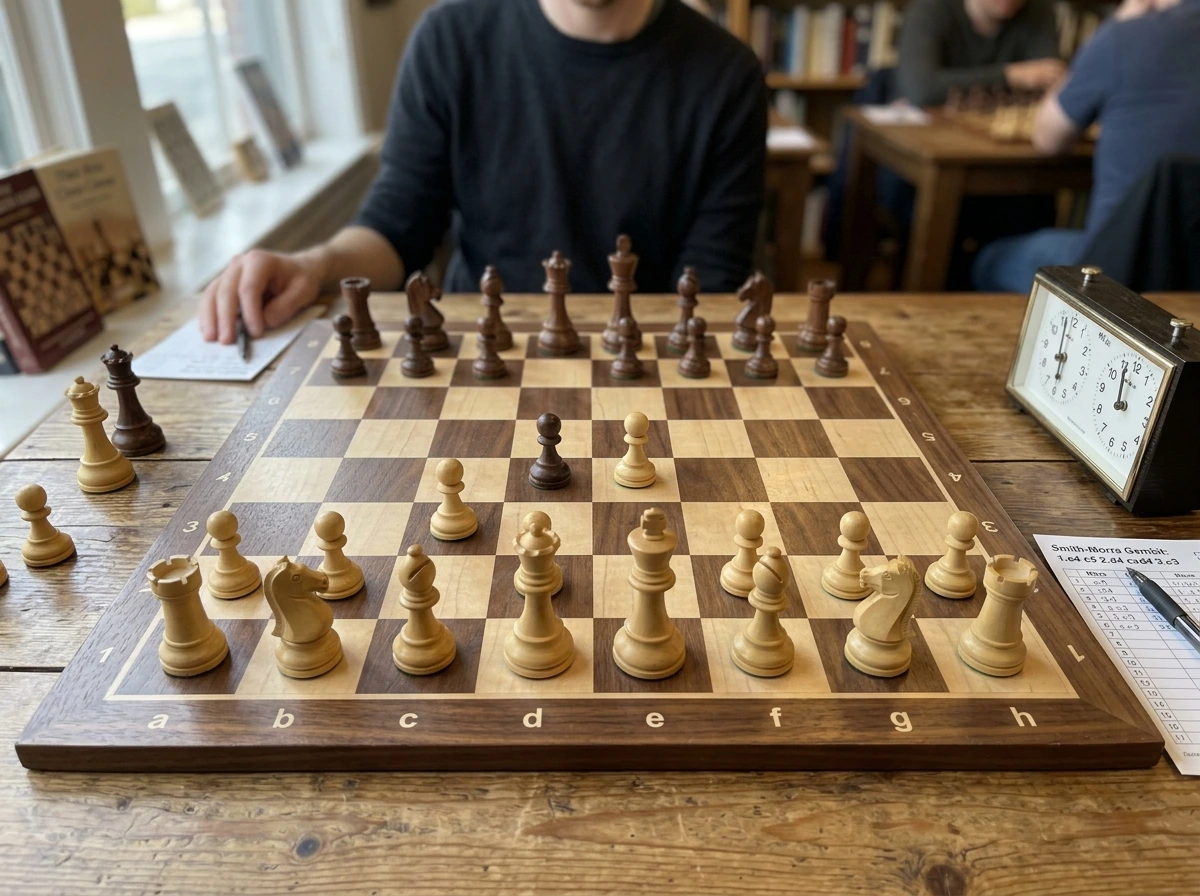
This is the best way to fight against the Sicilian Defense.
White gives up a pawn to get pieces out quickly and open up the center. After **3…dxc3 4.Nxc3**, White has a strong setup with **Bc4**, **Nf3**, **0-0**, and pressure on the d-file and the king’s side.
The Smith-Morra leads to situations where Black has trouble getting their pieces in order.
There are traps, like the Siberian Trap, that can catch unprepared Sicilian players. It’s very effective in fast time limits.
How to Win Fast with These Openings
Success depends on:
– Quick development — get all your pieces out before Black castles.
– Control of the center and open lines — use the sacrificed pieces to take over space.
– Direct attacks on f7 or the uncastled king.
– Keeping the initiative — keep checking or making threats so the opponent doesn’t get a chance to stabilize.
Study the main lines (10–15 moves) thoroughly and practice in blitz to build your instinct.
Free Demo Class for Kids
Let your child explore 60-minute free interactive session with FIDE Rated coaches.
Enroll HereTactical Themes Behind Fast Wins
Common themes include:
– F7 attacks (Fried Liver, King’s Gambit)
– Discovered checks and forks after king exposure
– Bishop pair dominance (Danish Gambit)
– Open files for rooks (Smith-Morra, King’s Gambit)
– Overloaded defenders and deflection tactics
Mastering these patterns turns gambits into winning weapons.
Deadly Opening Traps
These openings are full of traps:
– King’s Gambit: Early queen checks and f7 weaknesses.
– Danish Gambit: Greedy pawn grabs leading to devastating bishop attacks.
– Fried Liver: King hunt after Nxf7.
– Vienna Game: Early f4 lines catching Black off guard.
– Smith-Morra: Development lead turning into quick mating attacks or material wins.
Learn 2–3 key traps per opening and watch your win rate soar against unprepared foes.
Best Use Cases
These openings shine in:
– Blitz and rapid games (where precision defense is harder)
– Against lower-rated or unprepared opponents
– When you want fun, tactical battles instead of long maneuvering
– Club tournaments and online platforms
They are less ideal in classical time controls against strong titled players who know the refutations.
Common Mistakes to Avoid
– Over-greedily grabbing pawns without developing.
– Neglecting king safety after sacrificing.
– Playing too fast without calculating forced lines.
– Not knowing the main defensive resources for your opponent.
– Switching openings too frequently without mastering one.
Study the refutations so you can punish mistakes and avoid falling into them yourself.
Free Demo Class for Kids
Let your child explore 60-minute free interactive session with FIDE Rated coaches.
Enroll HereConclusion
The King’s Gambit, Danish Gambit, Fried Liver Attack, Vienna Game, and Smith-Morra Gambit are five of the most exciting and effective ways to start a game with an aggressive style.
They reward bold moves, punish slow or overly cautious play, and create exciting tactical situations on the board.
If you like sharp, attacking chess and want to finish games quickly with brilliant combinations, try adding one or two of these to your repertoire.
Practice them in blitz, learn the key traps and tactical patterns, and watch your rating rise as your opponents struggle under early pressure.
Chess is most fun when you’re the one attacking these openings give you that power.
Choose your favorite, study the main lines, and start winning fast!
FAQ
Most are considered slightly dubious by engines with perfect play, but they score very well below 2000 Elo and in faster time controls due to practical difficulties for the defender.
Fried Liver Attack or Smith-Morra Gambit they have clear attacking plans and many traps that work even against stronger players who are unprepared.
Learn the first 10–12 moves deeply, study model games (especially Tal and Morphy for King’s Gambit), and practice in blitz/rapid on venturechessacademy.com.
Most are for White.For aggressive Black play, consider the Latvian Gambit or Albin Counter-Gambit, but the ones listed work best with the first-move advantage.
Occasionally in blitz or as surprises.
Top players use them sparingly but appreciate their surprise value.
Shift to the main lines with best play or transpose into related aggressive systems.
Even then, the initiative often remains with the gambiteer.