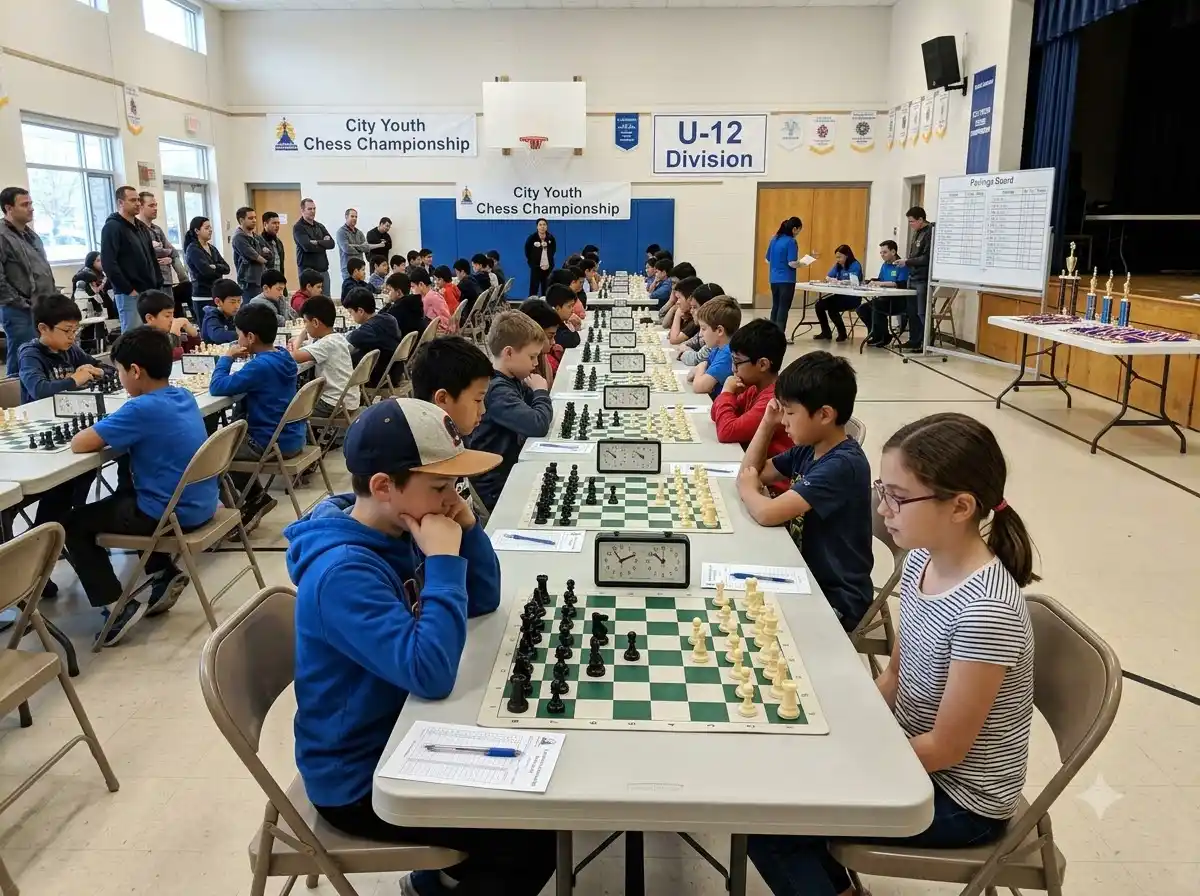

Chess is loved by millions of people around the world, and many new players come across the Scholar’s mate trap early in their learning. This strategy can lead to a quick win, which is incredibly exciting for beginners. Resulting in a checkmate in just four moves, it can catch opponents off guard instantly.
However, knowing exactly how it works is vital. Learning the Scholar’s mate helps you both attack and defend better, ensuring you do not fall victim to early ambushes. This comprehensive guide covers how to execute the trap, how to defend against it, and why relying on it too heavily can hinder your chess growth. For more insights, you can always explore our expert chess articles and tactical guides tailored for young players and parents.
What is a Scholar's Mate?
Scholar’s mate is a classic opening trap that is highly effective against inexperienced players. It leads to a forced checkmate in just four moves. White uses it to punish Black’s weak defense, and the name derives from “schoolboy” tactics historically, young students would use this technique to outplay their classmates.
This chess tactic takes advantage of the inherent weakness of the f7 pawn. At the start of the game, this pawn is positioned dangerously close to the king and is defended only by the king itself. Skilled players avoid leaving this weakness unguarded. However, in online blitz games, it can still be successful if opponents fail to recognize the pattern.
How to Deliver Scholar's Mate (Step-by-Step)
Delivering a Scholar’s mate requires accuracy and precise timing. Follow these steps carefully to coordinate your Queen and Bishop:
- 1. e4 e5: Begin by moving the King’s pawn two squares forward. This move strongly takes control of the center. Black typically replies symmetrically.
- 2. Qh5 Nc6: White brings out the Queen in an aggressive manner to a strong early position. Black may respond by developing a Knight to defend their e5 pawn.
- 3. Bc4 Nf6??: White follows up by developing the light-squared Bishop, taking aim directly at the f7 square. Black plays a fatal mistake (Nf6), carelessly attempting to attack the White Queen while ignoring the true threat.
- 4. Qxf7#: The Queen captures the f7 pawn, and checkmate delivers an instant win. The Black king is blocked by its own pieces and cannot capture the Queen because it is protected by the Bishop on c4.
How to Defend Against Scholar's Mate
Defending against Scholar’s mate is simple if you stay alert from the start. Once you recognize the pattern, you can easily neutralize the threat and safely develop your pieces.
1. e4 e5 2. Qh5 Nc6: When White brings the Queen out, immediately play your Knight to c6 to protect your e5 pawn.
3. Bc4 g6!: When White lines up the Bishop to attack f7, push your g-pawn to g6. This pushes the Queen back and completely blocks the attack on the f7 square.
4. Qf3 Nf6: White will likely move the Queen to f3 to threaten checkmate one more time. Now, you can safely play your Knight to f6. This blocks the Queen’s path permanently, keeps your King safe, and develops a minor piece.
By practicing these defenses regularly, you build muscle memory. Good habits can stop this four-move checkmate for good. You can sharpen your board vision and practice defending against these patterns by playing our interactive free mini chess games and online puzzles.
Limitations and Common Mistakes
While Scholar’s mate works well against beginners, more experienced players (with ratings above 1000) do not take it seriously. It brings the Queen out too early, making it a prime target for the opponent to attack.
When you bring your Queen out prematurely, you violate core chess opening principles, which dictate that you should control the center squares, develop your minor pieces (Knights and Bishops) early, and castle quickly for King safety. Opponents will punish the early Queen move by developing their pieces with tempo while you waste valuable time retreating. Rather than relying on cheap tricks, players who build foundational skills often go on to achieve stellar tournament victories and strong international ratings.
Variations of Scholar's Mate
Variations add different twists to the basic idea, allowing you to keep opponents guessing.
- The Bishop-First Variation: Instead of bringing the Queen out immediately, White starts with 1. e4 e5 2. Bc4. If Black responds with 2… Nc6, White then plays 3. Qh5, creating the same deadly battery aimed at f7.
- The Reverse Scholar’s Mate: Black can attempt to turn the tables on White. By targeting White’s equally weak f2 square with early moves like …Qh4 and …Bc5, Black can set up this exact same plan if White plays carelessly.

Learn Real Chess Strategies with Venture Chess Academy
If you want to move beyond basic traps and build a solid foundation, structured learning is the key. Venture Chess Academy offers structured online chess classes for kids, providing systematic courses and expert training for all skill levels.
Led by FIDE-rated coaches, the academy’s curriculum ensures students master fundamental opening principles, tactical drills, and puzzle quests rather than relying on cheap tricks. Whether your child is an absolute beginner starting in the “Pawn” batch or an advancing player in the “Bishop” batch, our customized game analysis and structured syllabus will help them thrive. Based in Puttur, Karnataka, our academy serves a global student base across India, the USA, the UK, and the UAE.
Free Demo Class for Kids
Let your child explore 60-minute free interactive session with FIDE Rated coaches.
Enroll HereThe Scholar’s mate is chess’s first real lesson in aggression, vulnerability, and respect for the board. It humbles the careless and rewards the alert. Every player remembers the first time they fell for or delivered this checkmate. Use it in casual games to spark joy, teach it to friends, and study the defenses so you never fall for it again. Let it be the opening chapter of your chess journey, not the whole book, as a universe of brilliant strategies awaits beyond move four.
Conclusion
The scholar’s mate is more than just a quick win it’s chess’s first real lesson in aggression, vulnerability, and respect for the board. As a four-move checkmate, it humbles the careless and rewards the alert. Beginners who master it gain confidence. Those who survive it grow wiser. Every player, from 400 to 2400, remembers the first time they fell for or delivered the four-step checkmate.
Use the scholar’s mate in casual games to spark joy. Teach it to friends. Laugh when it works. Study the defenses and never fall for it again. Let it be the opening chapter of your chess journey, not the whole book. Beyond move four lies a universe of beauty waiting to be explored. Now grab a board. Set up the position. Try it yourself. Win fast, defend smarter, and keep falling in love with the game.
Frequently Asked Questions
Scholar’s mate is a chess game that ends in four moves. The white player quickly checkmates the black king. This tactic targets the weak pawn on the f7 square.
Yes, black can attempt a similar approach but in reverse. It follows the same idea as white’s plan against f2. Whether it works depends on how white plays.
They ignore threats in the center. Their pieces aren’t developed properly. The combination of the queen and bishop catches them off guard.
Rarely at high levels. Professionals can defend against it easily. It might work sometimes in casual or blitz games.
Play with friends using boards. Try apps like Lichess to practice against bots that are set up for this move repeatedly.