Introduction
In chess, few combinations are as lethal, as elegant, or as frequently misunderstood as the knight-rook partnership. On the surface, these two pieces seem like an unlikely pair the rook, a long-range powerhouse that dominates open files and ranks, and the knight, a short-range acrobat that leaps over obstacles and strikes at unexpected angles. Yet when these two forces are properly coordinated, they form one of the most dangerous attacking duos on the chessboard.
The knight-rook combination sits at the heart of some of chess’s most celebrated mating patterns — Anastasia’s Mate, the Arabian Mate, and countless tactical finishes that have graced tournament games across centuries. But understanding this combination goes far beyond memorizing mating patterns. It requires learning how to position these pieces in harmony, how to recognize the structural conditions that make their partnership explosive, and how to steer the game toward positions where their combined strength overwhelms the opponent’s defenses.
At Venture Chess Academy, we teach the knight-rook combination as a cornerstone of tactical education not because it is flashy, but because mastering it builds the kind of piece coordination instinct that elevates every aspect of a player’s game. This guide will take you through the theory, the patterns, the step-by-step setup, and the real-game applications that will make this combination a reliable weapon in your arsenal.

Core Mating Patterns with Knight and Rook
Before setting up the combination, you need to know what you are aiming for. The knight-rook duo produces several distinct mating patterns, each with its own geometry and preconditions.
Anastasia’s Mate is the most iconic of these patterns. It occurs when a knight is posted on e7 (or a7 by mirror), controlling the g6 escape square, while a rook delivers checkmate on h8 with the enemy king trapped by its own pawns on g7 and h7. The king, castled into what should be safety, finds itself entombed by its own defensive structure.
The Arabian Mate operates on a corner of the board. The rook covers the rank (for example, the 8th rank), and the knight sits on an adjacent square, controlling the only escape square available to the cornered king. Together, the two pieces create an inescapable net with remarkable economy no extra material needed.
The Corridor Mate variation uses the rook to drive the king to the edge of the board while the knight cuts off escape on the adjacent file. Unlike pure rook-and-king checkmates, the knight’s presence makes this possible with the king much further from the corner, saving crucial tempos in time-pressured endgames.
Understanding these three patterns gives you a destination. Every step you take in setting up the knight-rook combination should be pointing toward one of these finishes or toward the structural advantages that make such finishes possible.
Piece Coordination: How Knight and Rook Work Together
The secret to the knight-rook combination lies in understanding what each piece does best and how their strengths are complementary rather than overlapping.
The rook thrives on open files, ranks, and long diagonals of force. It is most powerful when it can move freely along an entire row or column without obstruction. Its weakness is that it cannot control squares of both colors, and it cannot leap over obstacles. Against a king that has several escape squares available on both colors, the rook alone is insufficient.
The knight’s power is precisely what the rook lacks. It controls squares of one color on one jump and a completely different color on another, creating a web of control that cuts across the board in non-linear patterns. The knight can also occupy an outpost a square where it cannot be attacked by enemy pawns and sit there as a permanent thorn in the opponent’s position.
When you combine these two pieces, the rook provides the linear force pressuring along files and ranks, cutting off the king’s movement on one axis while the knight provides the angular cover that seals off escape routes the rook cannot reach. The king, facing threats from two fundamentally different types of movement, finds itself unable to escape in any direction.
This complementary relationship is why the knight-rook combination produces such clean checkmates. It is not brute force it is geometric perfection.
Step-by-Step Guide: Setting Up the Combination
Knowing the theory is one thing. Constructing the combination in a real game requires a disciplined, sequential approach. Here are the five core steps.
Step 1 — Identify the structural preconditions. Before you can build the combination, the position must offer the right raw materials. Look for an enemy king that is or will be castled with unadvanced pawns, a semi-open or fully open h-file (or a-file), and a clear outpost square typically e7, d6, or f6 where your knight can land without being challenged by an enemy pawn. If these conditions exist, the combination is possible. If they do not, your first job is to create them.
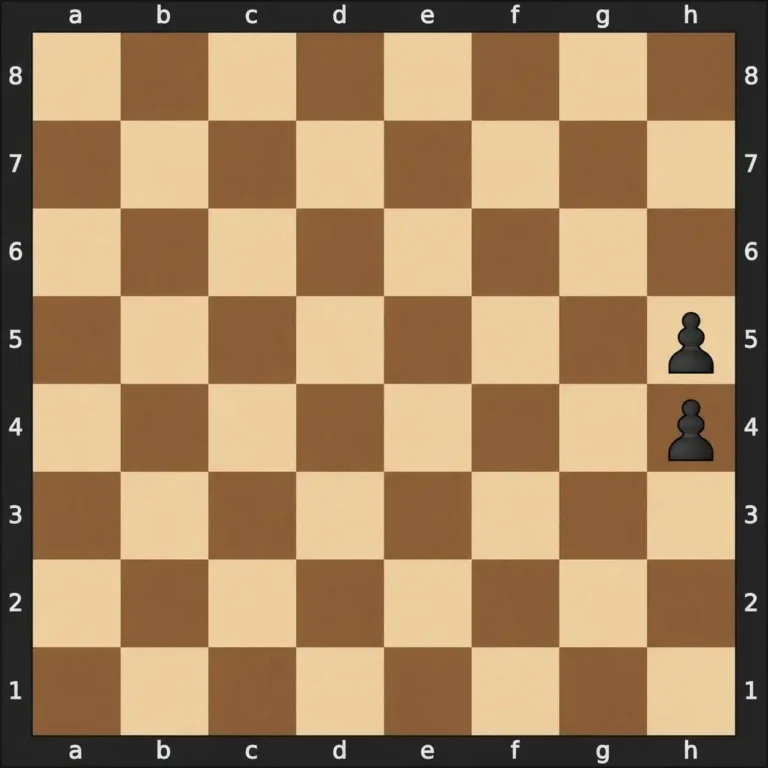
Step 2 — Open the relevant file. The rook needs a highway. Use pawn exchanges, piece sacrifices, or leveraging moves (h4–h5, for example) to crack open the file your rook will use. This is often the most forcing step in the combination and requires precise calculation you must ensure that opening the file benefits you more than your opponent. In many cases, a temporary material sacrifice at this stage pays enormous dividends two or three moves later.
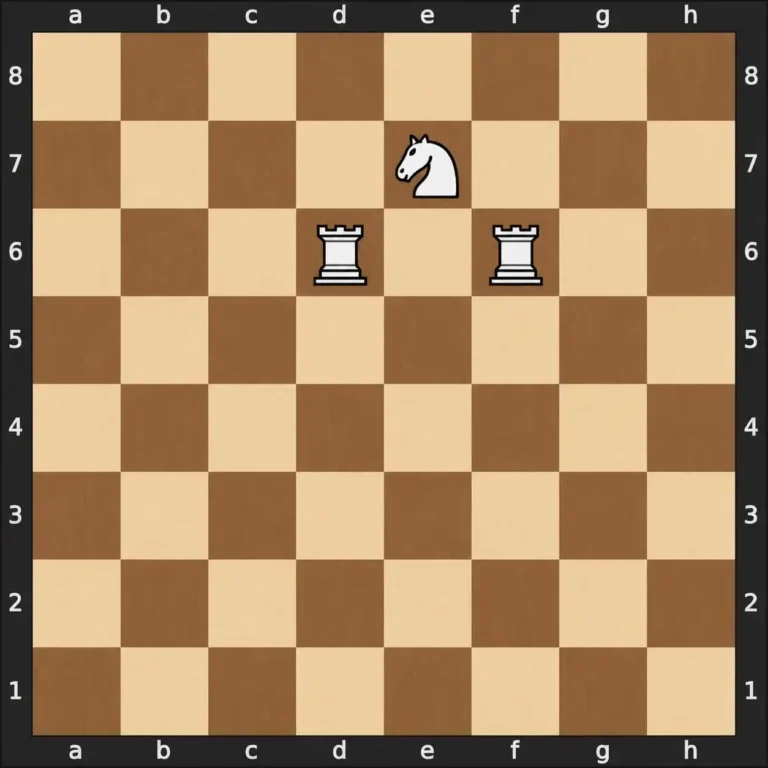
Step 3 — Install the knight on its outpost. Route the knight to its ideal square typically e7 for Anastasia’s Mate, or f6/d6 for attacking variations. This move is the keystone of the entire combination. Once the knight is entrenched on its outpost, it simultaneously covers key escape squares, supports the rook’s approach, and introduces mating threats that your opponent must respond to. In many games, this is the move that shifts the psychological momentum decisively in your favor.
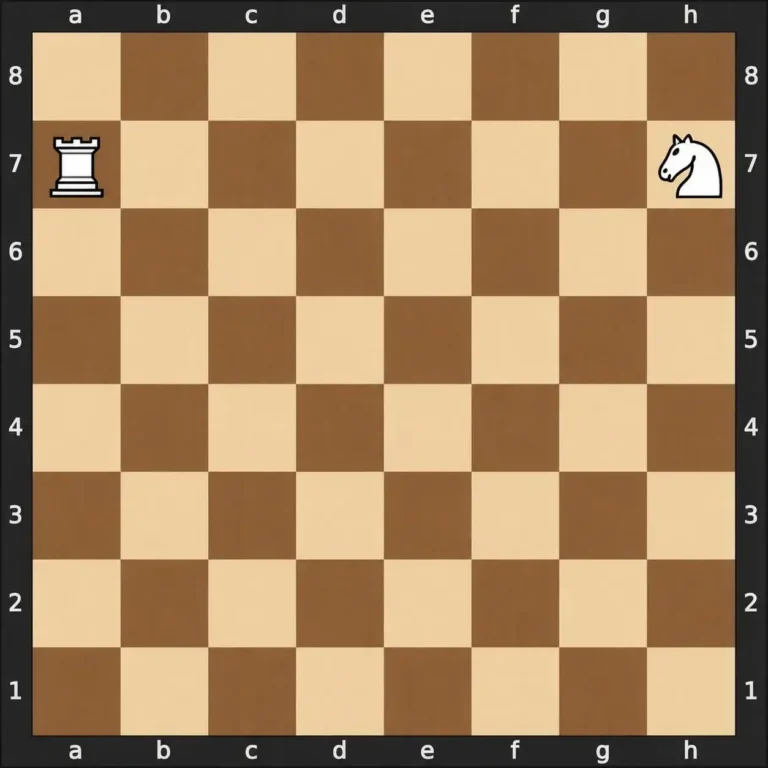
Step 4 — Double the pressure with your rook (or queen). With the knight in position and the file open, drive your rook to the relevant file and advance it as far as the position allows. The ideal is to reach h7 (or a7) threatening immediate back-rank checkmate and forcing the opponent into passive, reactive play. If you have two rooks, doubling them on the file before the knight is installed can be even more devastating.
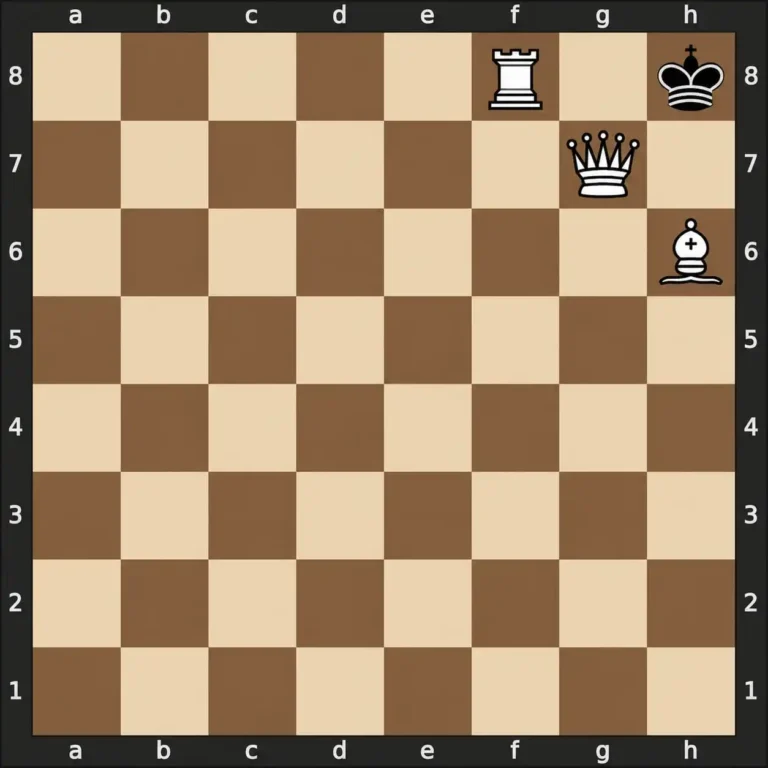
Step 5 — Execute or extract the maximum. Sometimes the combination ends in an immediate checkmate. More often, it produces a decisive material advantage or a permanently superior position. Be flexible if the opponent finds a defense that prevents immediate mate, assess whether you have won material, weakened their king permanently, or gained a winning endgame. The knight-rook combination does not always end in fireworks; sometimes it ends in a quiet, overwhelming positional advantage.
Tactical Themes That Lead to Knight-Rook Attacks
The knight-rook combination rarely appears in isolation. It is almost always the endpoint of a series of tactical themes that have been building through the game. Recognizing these themes gives you early warning that the combination is approaching.
The outpost invasion is the most common precursor. When your knight finds a square deep in enemy territory typically supported by your own pawns and immune to attack by enemy pawns the conditions for a knight-rook combination are beginning to take shape. The knight on the outpost will serve as the anchor point around which the entire attack is organized.
Deflection and decoy tactics frequently clear the path for the combination. A queen sacrifice, a rook trade, or a forcing pawn advance can remove the one piece that is preventing your knight from reaching its outpost or your rook from dominating the file. Always look for deflection opportunities when you sense the combination is one piece-removal away from being decisive.
Pin exploitation plays a supporting role in many knight-rook attacks. When an enemy piece is pinned to its king along a rank or file, it cannot fulfill its defensive function. A rook pin along the h-file, for example, can prevent the opponent’s rook from defending h8 — precisely the square where your mating rook needs to land.
Back-rank pressure amplifies the combination’s effect. When the opponent’s king is already uncomfortable on the back rank facing threats from your rook on the seventh rank, for instance the addition of the knight’s outpost control creates a vice from which there is often no escape.
Common Setups and Pawn Structures
The knight-rook combination flourishes in specific pawn structures. Learning to recognize these structures means you will spot the combination’s potential from the very first moves of the game.
The kingside fianchetto structure, where the opponent has played g6–Bg7 and castled kingside, is paradoxically one of the most vulnerable to the knight-rook combination. The g7-bishop often blocks the king’s own escape, and an exchange sacrifice on g7 can eliminate the bishop while opening the h-file simultaneously a dual-purpose sacrifice that sets up the combination in one move.
The classical castled pawn structure with pawns on f7, g7, and h7 is the most textbook environment for Anastasia’s Mate and its variations. The three unadvanced pawns create a permanent wall that the king cannot escape through, and the h-file, once opened, becomes a direct channel to the back rank.
The queenside castled structure mirrors all of these patterns on the a-file. With pawns on a7, b7, and the king on a8 or b8, the knight on c7 and a rook on a1 recreate the identical geometry on the opposite side of the board. Players who only study the kingside version of the combination often miss these queenside opportunities entirely.
Free Demo Class for Kids
Real Game Examples
The knight-rook combination is not a theoretical curiosity it has decided games at the highest levels of competitive chess throughout history.
In a celebrated 19th-century game, White maneuvered a knight from c3 to d5 to e7 over six quiet moves, all while building rook pressure on the h-file. When the combination finally detonated with Rxh7+, Black had no defense the knight on e7 controlled every escape square, and the pawns on g7 and f7 sealed the rest. The finish was hailed as a masterpiece of long-range tactical planning.
In a more recent club-level example, the attacker used a pawn sacrifice on h5 to crack open the h-file, then rerouted a knight from f3 to g5 to e6, reaching the ideal outpost in just three moves. With the rook already on h1 and the knight anchored on e6, the threat of Rh8# was unstoppable. The opponent resigned after seeing that every defense allowed a decisive material loss.
At the grandmaster level, this combination often appears in subtler form. Rather than a forced checkmate, the knight-rook coordination creates a winning endgame the knight holds a critical pawn while the rook infiltrates the seventh rank, cutting off the enemy king and systematically winning material. Understanding these quieter applications of the combination makes you a far more complete player.
Common Mistakes and How to Avoid Them
The knight-rook combination is powerful, but it demands precision. These are the errors that most frequently derail it.
Rushing the knight to its outpost before the file is open is the most costly mistake. A knight on e7 that the opponent can attack or ignore is a waste of tempo. Always open the file first, or at minimum, begin opening it simultaneously with the knight’s advance.
Failing to calculate the opponent’s counter-threats leads to painful reversals. While you build the combination, your opponent is not passive they are looking for back-rank mates of their own, queen checks, or tactical shots that exploit your king’s exposure. Always assess your own king’s safety before committing to the final sequence.
Stopping the combination too early for material gain is a subtler error. When you win a pawn or an exchange during the setup phase, it can be tempting to consolidate rather than continue the attack. In most cases, continuing the combination produces a far greater advantage than pocketing the material gain and allowing the opponent to reorganize.
Misjudging the knight’s outpost stability is a technical error that even experienced players make. Before landing the knight on its ideal square, confirm that the opponent has no pawn advance or piece maneuver that can dislodge it within the next two or three moves. An outpost knight that can be immediately challenged is not truly an outpost at all.
Common Mistakes and How to Avoid Them
The knight-rook combination must be absorbed through repetition, not just understood intellectually. Here are four practice positions of increasing complexity.
Exercise 1 — The pure setup (Beginner) White: Ke1, Rh1, Ne7. Black: Kg8, pawns on g7 and h7. White to move and checkmate in one. Answer: Rh8#
Exercise 2 — File opening required (Intermediate) White: Ke1, Rh4, Nd5, pawn on h5. Black: Kg8, Rg8, pawns on g7, h7, f7. White to move and force checkmate in three. Answer: hxg6 (opening the h-file) — Ne7+ — Rh8#
Exercise 3 — Deflection before execution (Advanced) White: Ke1, Rh1, Nc5, Qd3. Black: Kg8, Rd8, pawns on g7, h7. White to move and force checkmate in four, beginning with a deflection sacrifice. Answer: Qxh7+ — Kxh7 — Rh1+ — Kg8 — Rh8#, with Ne6 covering f8
Exercise 4 — The queenside mirror (Advanced) White: Ke1, Ra1, Nc7. Black: Ka8, pawns on a7, b7. White to move and deliver Arabian-style checkmate using the combination on the a-file. Answer: Ra8# (knight on c7 covers b5 and a6, pawns on a7 and b7 seal the king)
Work through each exercise without moving pieces first. Write down your calculation before checking the answer. This discipline of visualization is what separates players who know the patterns from players who can actually execute them under pressure.
Advanced Tips and Variations
Once you are comfortable with the standard knight-rook combination, these advanced concepts will expand your mastery significantly.
The rook-doubling amplification involves bringing both rooks to the target file before the knight reaches its outpost. This approach eliminates any defensive resource the opponent might use and makes the combination virtually unstoppable once the knight arrives. The downside is the additional time required use this approach when the position is quiet and your opponent lacks counter-play.
The queen-for-rook substitution can accelerate the combination dramatically. In positions where a queen can replace the rook on the h-file often following a queen sacrifice that forces an exchange or deflects a defender the mate arrives a move or two earlier than the opponent anticipates. This timing advantage is frequently decisive.
The long-range preparation strategy is the hallmark of advanced players. Rather than building the combination over five or six moves, these players construct it over fifteen or twenty maneuvering the knight to its outpost as part of a broader positional plan, building rook pressure gradually, and waiting for the moment when the combination becomes not just possible but completely irresistible. This patient approach is what separates strong club players from tournament competitors.
Finally, learning to abandon the combination when necessary is itself an advanced skill. If the opponent finds an unexpected defense that neutralizes the mating threat, the pressure you have built on the h-file and the knight’s dominance of its outpost still represent enormous positional advantages. Recognize when the combination has not produced a forced mate but has instead produced a winning position by other means and convert accordingly.
Free Demo Class for Kids
Conclusion
The knight-rook combination is one of chess’s most enduring and versatile attacking weapons. It is the engine behind some of the game’s most celebrated finishes, a practical tool in club and tournament play, and a masterclass in the kind of piece coordination that separates average players from truly dangerous ones.
The journey to mastering this combination runs through pattern recognition, structural awareness, tactical calculation, and the disciplined patience to build an attack over multiple moves rather than striking prematurely. Every element of this guide the mating patterns, the piece coordination principles, the step-by-step setup, the tactical themes, the common mistakes is a piece of that journey.
At Venture Chess Academy, we believe that the knight-rook combination is not just a tactic. It is a philosophy of chess a reminder that two pieces working in genuine harmony are worth far more than four pieces pulling in different directions. When you internalize this lesson, it transforms not just your tactical play but your entire understanding of the game.
Study the patterns. Solve the puzzles. Set up the combination in your practice games. And when the position demands it, trust the knight and the rook to do what they have done for generations of chess players deliver the decisive, unforgettable blow.
FAQ
A queen can absolutely replace the rook and often makes the combination even more powerful, as it combines the rook’s linear force with additional diagonal coverage. However, the queen-knight combination requires slightly different calculation because the queen’s extra mobility can sometimes allow the opponent to trade it off prematurely. The pure knight-rook version is more reliable to learn first precisely because it is more forcing.
Look for three things simultaneously an enemy king that is or will be forced to the edge of the board, a semi-open or fully open file leading to that king, and a clear outpost square your knight can reach within two to three moves. When all three conditions exist, the combination is worth calculating seriously. If only one or two conditions are present, your immediate goal is to create the missing element.
Play slow games (30 minutes or more per side) with the deliberate intention of seeking knight-rook coordination opportunities in every position. After each game, analyze whether you found all such opportunities, missed any, or mishandled the ones you found. This purposeful practice builds pattern recognition far faster than simply playing rapid games without post-game analysis.
It is extremely effective in the endgame, particularly when the opponent’s king has been driven to the edge of the board and their defensive pieces have been exchanged off. The Arabian Mate and corridor mate variations are almost exclusively endgame patterns. At Venture Chess Academy, we teach the endgame applications alongside the middlegame patterns precisely because players often overlook this dimension of the combination’s power.
With consistent focused practice 10 to 15 targeted puzzles per day plus weekly slow games most intermediate players begin to recognize and construct the combination reliably within two to three months. Mastering the advanced variations and long-range preparation strategies takes longer, typically six months to a year of dedicated study. The investment is more than worthwhile, as the piece coordination instincts you develop will improve every other aspect of your game as well.