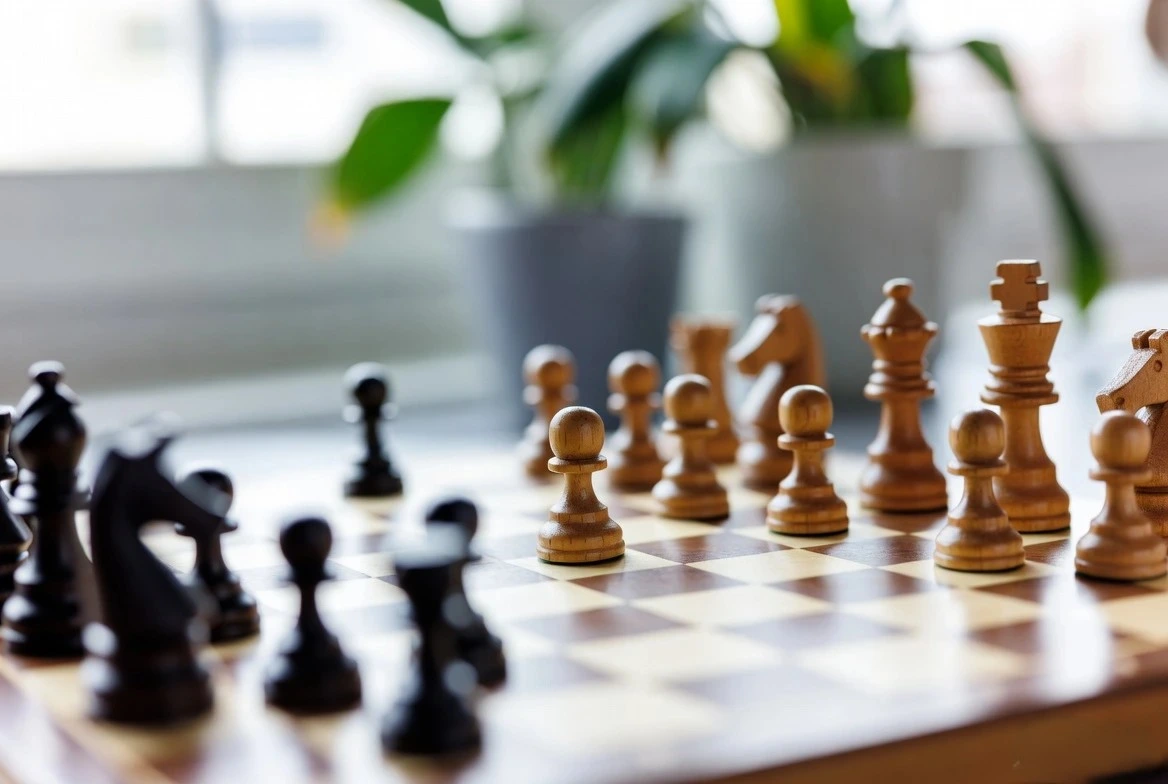
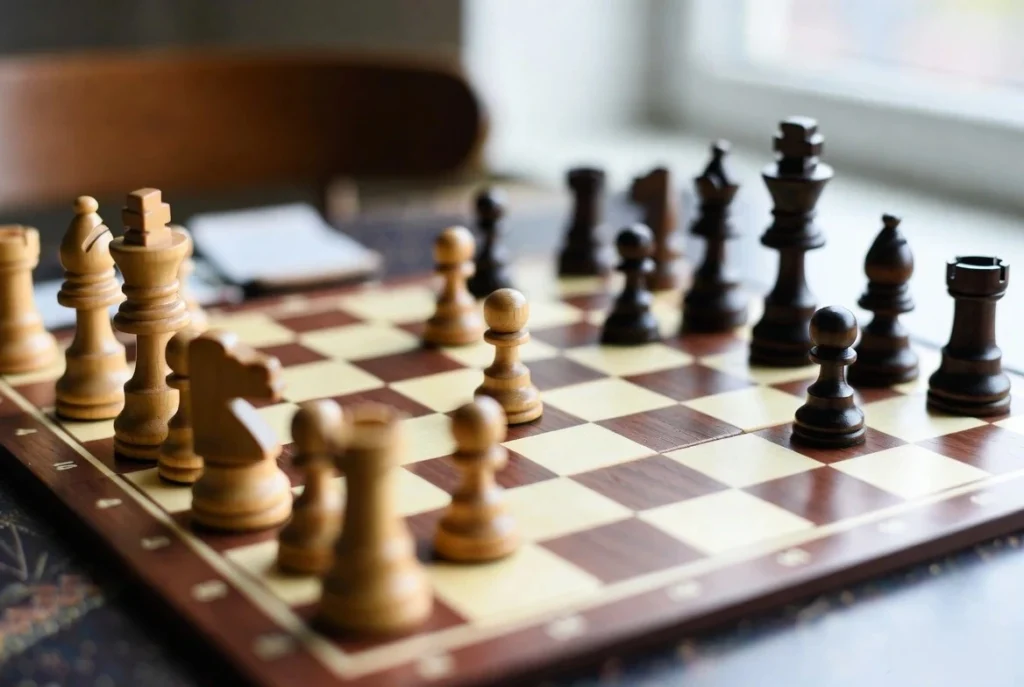
The King’s Pawn Opening (1.e4) is one of the most popular moves in chess, used in more than half of the games played by top players on Lichess. It gives White control of the center and helps develop pieces quickly. But Black has strong responses. Moves like the Sicilian (1…c5) have a high chance of leading to a win for Black, with a 34% win rate on Chess.com. Other solid options, like the Caro-Kann (1…c6), help Black keep the game balanced. With clever moves, traps, and strategies used by grandmasters, you can outplay players who start with 1.e4. This guide explores Black’s best options, helping you exploit mistakes and win quickly.
Introduction to the King's Pawn Opening (1.e4)
The move 1.e4 takes control of the center, opens up lines for the queen and bishop, and sets up quick castling. White usually aims to gain space, but Black can respond by challenging with the Sicilian, mirroring with 1…e5, or countering with the Caro-Kann or French Defense. According to Lichess data, Black scores around 45-50% against the major replies to 1.e4, often performing better than when facing 1.d4.
The Sicilian Defense: Black's Most Aggressive Response (1...c5)
1…c5 creates an imbalance: Black challenges the center and looks for counterplay on the queenside. The Najdorf (2…d6 3.d4 cxd4 4.Nxd4 Nf6 5.Nc3 a6) and Dragon (5…g6) variations lead to dynamic, unbalanced middlegames where Black’s kingside fianchetto is a strong attacking tool. Black’s winning percentage is 34%, making it great for aggressive players.
Caro-Kann Defense: A Steady Approach with Counterattacks (1...c6)
1…c6 prepares to play …d5 without leaving the e6 square weak.
The Advance variation (3.e5 Bf5) restricts White’s options, while the mainline (3.Nc3 dxe4) gives Black’s light bishop more space. Karpov often used this defense for an edge in the endgame. Black draws 32% of the time and wins 30% of those games.
French Defense: Strong Structures and Unexpected Breakthroughs (1...e6)
1…e6 supports the future …d5 move and controls the center.
The Winawer (3.Nc3 Bb4) variation complicates White’s queenside, while the Advance variation leads to many tactical traps. Black’s …c5 and …f6 breaks can be very effective, solid and powerful.
Free Demo Class for Kids
Let your child explore 60-minute free interactive session with FIDE Rated coaches.
Enroll Here1...e5: Symmetrical Open Games and Deadly Traps
Classical reply: Mirrors White, leading to Ruy Lopez or Italian Game.
Two Knights (2.Nf3 Nc6 3.Bc4 Nf6) has traps — 4.Ng5 d5 5.exd5 Na5 wins material.
Underrated Weapons: Scandinavian (1...d5) and Alekhine (1...Nf6)
Scandinavian (2.exd5 Qxd5) simplifies, and the queen is active early (win rate ~33%). Alekhine provokes overextension: 2.e5 Nd5, Black’s counterattacks stretch the pawns.
Hypermodern Surprises: Pirc and Modern Defenses
Pirc (1…d6 2.d4 Nf6 3.Nc3 g6) fianchettoes the bishop, waiting for …e5. Modern (1…g6) is flexible club players love the surprise value.
Top Traps and Blunders: Common Mistakes That Can Cost You
- Sicilian Dragon Trap: 1.e4 c5 2.Nf3 d6 3.d4 cxd4 4.Nxd4 Nf6 5.Nc3 g6 6.Be3 Bg7 7.f3 Nc6 8.Qd2 0-0 9.Bc4 Bd7 10.0-0-0 Rb8 11.h4 h5 12.Bg5 Re8 13.Kb1 a6?? Qa5! leads to checkmate.
- Two Knights Fried Liver Counter: 1.e4 e5 2.Nf3 Nc6 3.Bc4 Nf6 4.Ng5 d5 5.exd5 Nxd5?? 6.Nxf7 Kxf7 7.Qf3+ Ke6 8.Nc3 captures the knight.
- French Advance Trap: 1.e4 e6 2.d4 d5 3.e5 c5 4.c3 Nc6 5.Nf3 Qb6 6.Bd3 Bd7 7.0-0 cxd4 8.cxd4 Nxd4?? Nxd4 captures the queen.
- Caro-Kann Two Knights Trap: 1.e4 c6 2.Nc3 d5 3.Nf3 Bg4 4.h3 Bxf3 5.Qxf3 e6 6.Be2?? Qb6 forks the pieces.
- Alekhine Chase Trap: 1.e4 Nf6 2.e5 Nd5 3.d4 d6 4.Nf3 Bg4 5.Be2 e6 6.0-0 Be7 7.c4 Nb6 8.exd6 Bxd6?? Nc3 captures the bishop.
Famous Games and Grandmaster Brilliance
- Fischer vs Spassky, 1972 Game 6 (Sicilian Najdorf): Fischer’s …Rxd3 sacrifice broke through White’s defenses, leading to a brilliant Black victory.
- Karpov vs Timman, 1984 (Caro-Kann): Karpov used his precise play to turn a small advantage into a win.
Choosing and mastering your anti-1.e4 repertoire
For club players: go with the Caro-Kann for solid positions; if you’re more aggressive, try the Sicilian Najdorf.
Study 10 to 15 moves deep using Lichess studies. Combine this with tactic training.
Free Demo Class for Kids
Let your child explore 60-minute free interactive session with FIDE Rated coaches.
Enroll HereConclusion
Beating 1.e4 requires sharp play use the Sicilian for wins, the Caro-Kann or French for drawish positions, and look for traps to end games quickly. Study players like Fischer and Karpov, focus on one opening repertoire, and watch your opponents struggle. Your brilliant moves are waiting!
FAQ
Caro-Kann it’s solid and has fewer traps to remember.
About 34% for Black, based on data from Chess.com masters.
Caro-Kann tends to lead to more drawn games, while the French is more dynamic.
Chess.com openings, Lichess studies, and the Hanging Pawns and visit our YouTube channel.
1…e5 leads to a symmetrical game, while 1…c5 or 1…c6 creates more imbalances.
Traps are common for players below 2000 Elo playing too aggressively can backfire.