
Choosing the right extra-curricular activity for your child can be overwhelming. As a parent, you want an activity that isn’t just fun, but also builds discipline, critical thinking, and long-term problem-solving skills. Chess is widely recognized as one of the best tools for cognitive development yet not all chess programs are created equal.
Finding the best chess coaching centre for kids requires looking beyond generic online tutorials and crowded community classes. Young minds need structured instruction, individual feedback, and an encouraging environment to truly thrive.
Here is what sets top-tier chess academies apart, and why parents choose Venture Chess Academy to guide their children from absolute beginners to competitive players.
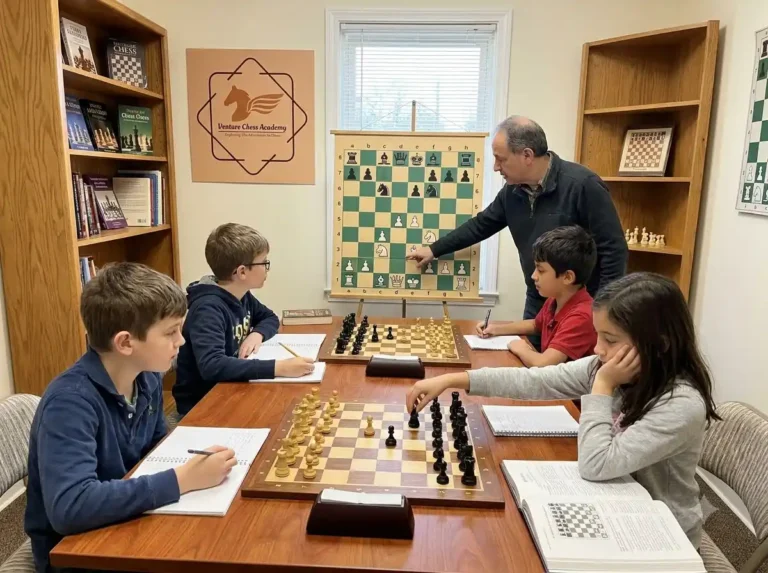
1. Batch Sizes and Personal Attention
In large group settings of 15 to 20 students, shy or beginner players often get left behind. The best chess academies prioritize small group sizes so coaches can monitor every move, identify individual mistakes, and tailor explanations to each child’s learning speed.
2. Experienced and FIDE-Rated Instructors
Learning chess fundamentals from standard enthusiasts can instill bad habits that are difficult to break later. Instruction from FIDE-rated coaches ensures your child learns correct opening principles, tactical calculation techniques, and end-game strategies right from day one.
3. Structured Curriculum vs. Casual Play
A great academy does not simply let kids play random games during class time. It follows a progressive curriculum moving systematically from basic piece movement and tactical motifs to deep positional understanding and tournament preparation.
4. Proven Track Record in Competitive Tournaments
If your child wants to test their skills in real-world settings, the academy should actively prepare and mentor students for local, national, and international tournaments.
At Venture Chess Academy, we designed our training environment around the specific learning needs of young children. We focus on building both tactical mastery and psychological resilience.
Strictly Capped Batch Sizes (Max 5 Students)
We strictly limit our classes to a maximum of 5 students per batch. This ensures every child receives direct, real-time feedback from their coach during every single session, preventing bad habits and accelerating progress.
Interactive Online & Offline Training Formats
Whether you prefer in-person learning or flexible home study, we offer both structured offline training and interactive online chess classes. Our digital platforms utilize interactive boards and live game analysis to keep young learners engaged.
Real Results in Rated Tournaments
Our teaching methodology speaks for itself. Venture Chess Academy students consistently participate and win honors in FIDE-rated tournaments and international events. We don’t just teach rules; we build confident competitors.
Enrolling your child in structured chess training yields benefits that extend far beyond the 64 squares:
Enhanced Focus & Attention Span: Chess conditions the brain to sit, observe, and process information deeply before acting—directly combating screen-induced short attention spans.
Improved Academic Performance: Studies consistently link early chess training to better spatial reasoning, pattern recognition, and mathematical performance in school.
Emotional Resilience: Learning how to handle a loss gracefully and analyze mistakes teaches kids perseverance and emotional discipline.
Every grandmaster was once a beginner who had an encouraging coach. Give your child the tools to calculate faster, focus deeper, and play with confidence.
Book a free 60-minute trial class with our FIDE-rated coaches to discover how Venture Chess Academy can transform your child’s focus and cognitive skills.
We strictly limit our classes to a maximum of 5 students per batch. This guarantees personalized instruction and direct engagement between every child and our FIDE-rated instructors.
Children can start learning basic chess concepts as early as age 4 or 5. Our beginner curriculum uses simplified, engaging exercises tailored specifically for young attention spans.