
Chess openings are where games are often decided for beginners and club players especially when your opponent falls into one of these sneaky traps that can lead to a quick checkmate.
These aren’t just tricks; they’re solid tactics that have been used throughout chess history. They take advantage of greedy moves, poor piece development, and a lack of attention. In Bengaluru’s lively chess community, from local clubs like Bangalore Chess Academy to online games on Lichess, they can surprise even players rated over 1500. Mastering these six traps can help you beat your opponents in under 10 moves and boost your blitz rating overnight. Let’s take a closer look!
Introduction to Chess Opening Traps
Opening traps work by taking advantage of common mistakes, like moving the queen too early, ignoring the weakness on f7, or capturing pawns without thinking.
They work well in e4/e5 openings where pieces aren’t developed quickly. According to Lichess data, these traps can succeed 40-60% of the time against players who aren’t prepared. The key is to set up a free material offer, then deliver a checkmate using a discovery, pin, or sacrifice. Practice these on Chess.com puzzles, your first victim is waiting!

Scholar’s Mate – The 4-Move Checkmate
The infamous Scholar’s Mate is the ultimate trap for beginners: simple, surprising, and finishes in just four moves.
Moves: 1.e4 e5 2.Qh5 Nc6 3.Bc4 Nf6?? 4.Qxf7#
White’s queen and bishop attack the weak f7 square.
Black’s move …Nf6 tries to attack the queen but ignores the danger. The queen sacrifices itself on f7, delivering checkmate and trapping the king.
Sneaky factor: It looks aggressive and innocent.
Black can counter with …g6 or …Qf6, but many players panic and make the wrong move.

Legal’s Mate – A Brilliant Queen Sacrifice
Named after an 18th-century player called Legal, this move is known as a queen sacrifice, and it’s really clever: it traps Black’s queen and delivers checkmate.
Moves: 1.e4 e5 2.Nf3 d6 3.Bc4 Bg4 4.Nc3 g6?? 5.Nxe5 Bxd1?? 6.Bxf7+ Ke7 7.Nd5#
Black tries to pin White’s knight with …Bg4, and White takes advantage by sacrificing the knight with Nxe5.
Black, in a greedy move, captures the queen with …Bxd1, but then White plays Bxf7+, which attacks both the king and the queen. The king has nowhere to go and moves to e7. Finally, Nd5# delivers checkmate.
The brilliance of this move is that the queen sacrifice not only wins material but also leads to checkmate.
This tactic works if Black develops the bishop too early.

Fried Liver Attack Trap
In the Two Knights Defense, the Fried Liver trap puts Black’s king in danger.
Moves: 1.e4 e5 2.Nf3 Nc6 3.Bc4 Nf6 4.Ng5 d5 5.exd5 Nxd5?? 6.Nxf7 Kxf7 7.Qf3+ Ke6 8.Nc3
Black’s move …Nxd5 overlooks the f7 square.
By sacrificing the knight on f7, White opens up important lines. The king moves away, and then Qf3+ forces the king to e6, where it gets caught in a fork by the knight on c3. This leaves the queen either trapped or leads to a quick checkmate.
Trap variant: If Black plays …Na5 instead, White can get back the material with a strong attack.
The name “Fried Liver” comes from the knight sacrifice on f7!

Blackburne Shilling Gambit
Joseph Blackburne made this inexpensive trap famous in the Italian Game.
Moves: 1.e4 e5 2.Nf3 Nc6 3.Bc4 Nd4?? 4.Nxe5 Qa5+ 5.Nc3 wins queen? Wait—trap! If 5.c3?? Qxe5, but the right move is Nxe5 first! Black’s …Nd4 targets the queen; if White takes the knight with Nxe5, then …Qa5+ and Nc3?? leads to Nf3#. This is a smothered mate pattern.
Standard trap: White is lured into capturing on e4 with Qxe4+; Black wins the queen or delivers checkmate.
Sneaky: Bait the knight with a sacrifice, then counter with a pin or check.
Englund Gambit Quick Mate Trap
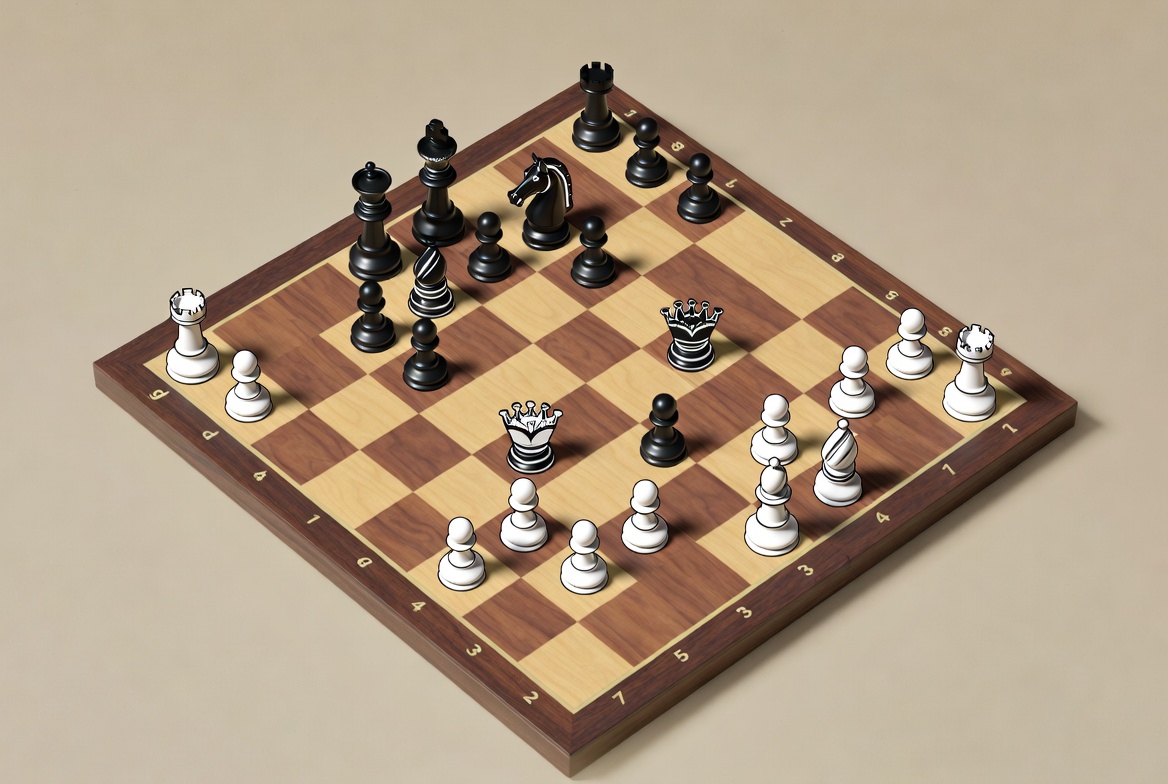
Aggressive 1.d4 e5?! leads to traps.
Moves: 1.d4 e5 2.dxe5 Nc6 3.Nf3 Qe7 4.Bf4 f6?? 5.exf6 Qxe4+ 6.Be2 Qxf2# or similar smothered lines.
Black regains material but sacrifices a pawn for a strong attack; if White is greedy, they fall into a quick checkmate.
Fast: Often mate in 7-8 moves using a queen and rook battery.
Elephant Trap in the Queen’s Gambit
QGD classic: White overextends the knight.
Moves: 1.d4 d5 2.c4 e6 3.Nc3 Nf6 4.Bg5 Nbd7 5.cxd5 exd5 6.Nxd5?? Nxd5 7.Bxd8 Bb4+ 8.Qd2 Bxd2+ 9.Nbxd2 Bb4#
Knight captures pawn; Black takes it back, pinning the queen to the king—trapped, mate follows.
Elephant = heavy artillery on d5.
Common Tactical Patterns in Fast Checkmates
These traps share common themes:
– f7/f2 weakness: Vulnerable king squares.
– Queen sacrifices or pins: Luring players into traps.
– Discovery and forks: Knights are especially effective.
– Smothered mate: Pawns block the king’s escape.
Practice: Try Lichess “mate in 5” puzzles.
How to Avoid Falling for Opening Traps
Develop the center, castle early, and calculate possible sacrifices.
Against the Scholar’s Mate: play …g6. In the Legal’s Mate: avoid …Bg4 early. Use chess engines after the game. Study the 10-move theory.
Final Thoughts
These traps turn openings into checkmate fun in blitz games, deadly in club play.
Practice regularly, but don’t rely on them alone; combine with solid, regular play.
Free Demo Class for Kids
Let your child explore 60-minute free interactive session with FIDE Rated coaches.
Enroll HereConclusion
With these six tricks, take control of the game. Whether it’s the Scholar’s shock or the Elephant crush, quick wins are possible. Play again, practice more chess, glory is waiting for you!
FAQ
Not very often, but some variations can surprise players with 1800+ Elo.
Try Lichess puzzles or Chess.com traps trainer.
It’s pretty balanced e4 openings work well for both sides.
You can find it by searching Lichess studies.
Yes these are fair tactics.
The Scholar’s Mate achieved in just 4 moves.